
Survivor Snakebite: What a Rare Sea Krait Bite Teaches Us About First Aid
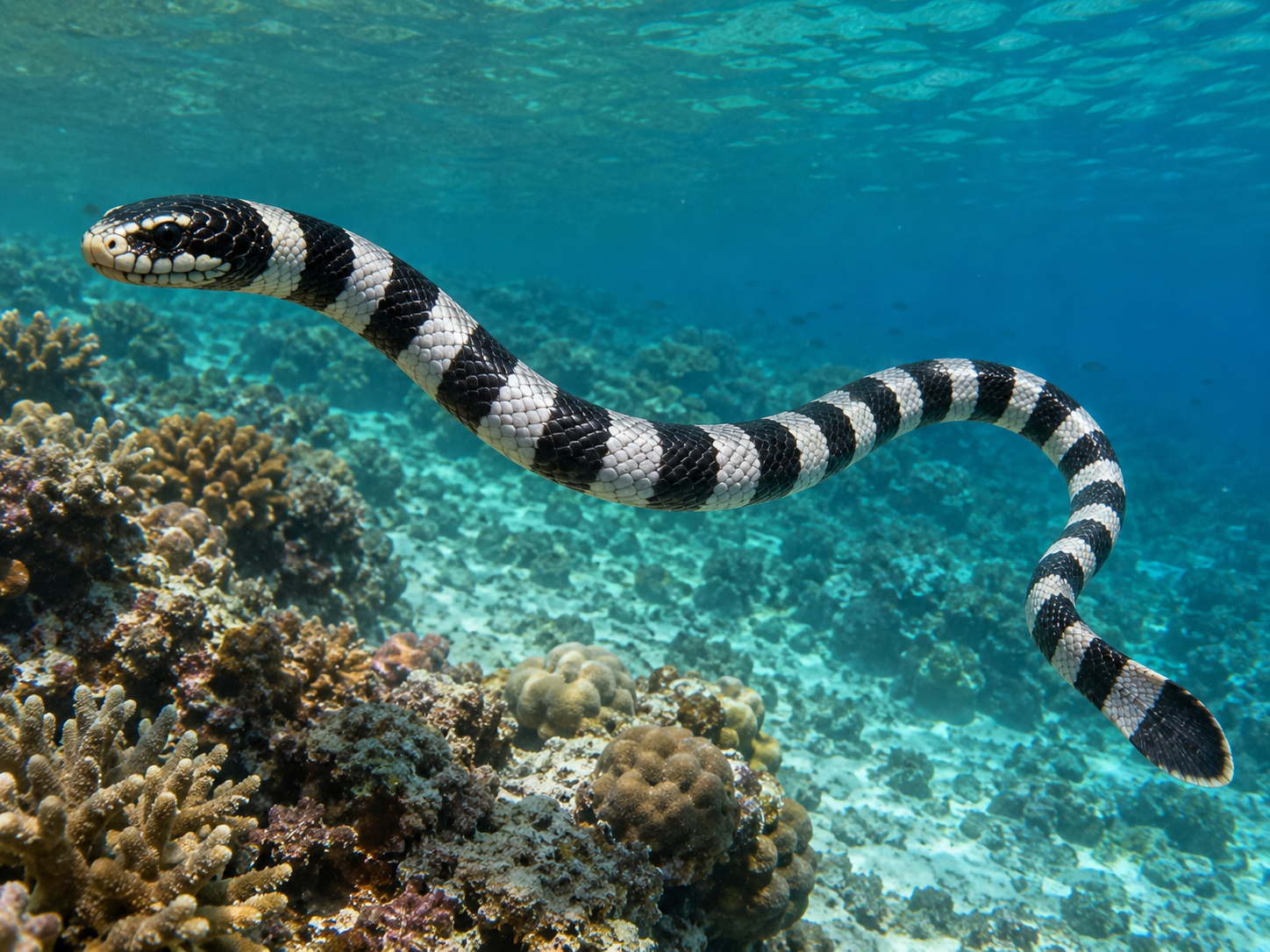
black-and-white sea krait / banded sea krait — a highly venomous but usually shy sea snake. Bites are rare and most often linked to handling or disturbing the snake
Survivor Snakebite: A Rare Reminder About First Aid, Calm Action and Respecting Wildlife
A recent episode of Survivor 49 gave viewers a very real first aid reminder when contestant Jake Latimer was bitten by a venomous black-and-white sea krait while filming in Fiji. The incident led to a medical evacuation from the game, although later reports said the bite was a “dry bite”, meaning venom was not injected.
For many viewers, it was a frightening moment. For first aid trainers, it was also a useful reminder: snakebite first aid is about staying calm, limiting movement, calling for urgent medical help, and using the correct pressure immobilisation technique when appropriate.
What is a black-and-white sea krait?
The snake involved was described as a banded sea krait, a highly venomous sea snake found in parts of the Pacific and Indo-Pacific region, including Fiji. Sea kraits are venomous, and their venom can affect the nervous system and breathing ability of their prey.
That sounds terrifying, but there is an important point: bites from sea kraits are very rare.
Why are bites so rare?
Sea kraits are generally not aggressive toward people. They are usually described as docile unless disturbed, handled, trapped or threatened. The New Zealand Department of Conservation notes that sea snakes and kraits are generally docile, although highly venomous, and should be left well alone.
In simple terms, these snakes are not out looking for humans. Most serious encounters with venomous marine snakes happen when the animal is accidentally stepped on, handled, trapped in fishing gear, or otherwise disturbed.
That is why the Survivor incident stood out. Millions of people swim, dive, fish and spend time around tropical waters, yet bites from sea kraits remain unusual. Rare, however, does not mean impossible — and that is where first aid knowledge matters.
A “dry bite” is still a medical emergency
Reports stated that Jake’s bite was a dry bite. That means the snake bit but did not inject venom. While that was a fortunate outcome, you cannot tell at the time whether venom has been injected.
That is why any suspected snakebite should be treated seriously.
The correct approach is not to wait and see. The correct approach is to act early, keep the person still, and get urgent medical help.
What should you do for a suspected snakebite?
In Australia, snakebite first aid includes:
Call Triple Zero — 000 — immediately.
Keep the person as still and calm as possible.
Apply a pressure immobilisation bandage if the bite is on a limb.
Immobilise the limb with a splint where possible.
Do not wash the bite site.
Do not cut the bite.
Do not try to suck out venom.
Do not apply an arterial tourniquet.
The Australian and New Zealand Committee on Resuscitation advises against cutting the bite area, sucking venom, washing the site, or applying an arterial tourniquet. NSW Poisons Information also lists pressure immobilisation as recommended for Australian snake bites, including sea snakes.
The big lesson for everyday first aid
Most of us in Canberra are unlikely to be bitten by a sea krait. But snakebite first aid is still very relevant in Australia, especially when people are gardening, walking, camping, travelling, fishing, or enjoying the outdoors.
The lesson from Survivor is not to panic about snakes. It is to respect wildlife, avoid handling snakes, and know what to do if something unexpected happens.
At Gungahlia First Aid, we teach practical, hands-on first aid skills so people feel more confident in real situations — not just in a classroom. Snakebite first aid is one of those skills you hope you never need, but if you do, knowing the right steps can make a real difference.
Final reminder
Snakebites are rare, and sea krait bites are rarer still. But all suspected snakebites should be treated as a medical emergency.
Stay calm. Keep still. Call 000. Apply pressure immobilisation if appropriate. Get help fast.
Want to feel more confident responding to emergencies? Join a friendly, practical first aid course with Gungahlia First Aid in Crace.